What is E-commerce
In today’s digital age, e-commerce has revolutionized the way we shop and conduct business. From purchasing daily essentials to booking services, it has made transactions more convenient and accessible. Let’s delve into the world of e-commerce to understand its essence, evolution, and impact.
Definition of E-commerce
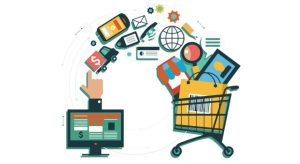
E-commerce, short for refers to the buying and selling of goods and services over the internet. It encompasses a wide range of online business activities for products and services, including retail shopping, banking, investing, and rentals.
Types of E-commerce
It can be categorized based on the nature of transactions:
Business-to-Consumer (B2C):
Transactions between businesses and individual consumers.
Example: Purchasing a book from Amazon.Business-to-Business (B2B):
Transactions between businesses.
Example: A manufacturer selling products to a wholesaler.Consumer-to-Consumer (C2C):
Transactions between consumers, often facilitated by a third party.
Example: Selling used items on eBay.Consumer-to-Business (C2B):
Individuals selling products or offering services to businesses.
Example: A freelancer providing services on platforms like Upwork.Business-to-Government (B2G):
Businesses providing goods or services to governments or government agencies.
Example: A tech company supplying software to a government department.
History of E-commerce
The journey of e-commerce is marked by significant milestones:
1960s: Introduction of Electronic Data Interchange (EDI) to share business documents electronically.
1979: Michael Aldrich invents online shopping by connecting a modified TV to a computer via telephone line.
1990s: The internet becomes commercially available, leading to the launch of online marketplaces.
1995: Amazon and eBay are founded, pioneering online retail and auctions.
2000s: Rapid growth of internet users boosts it; introduction of secure payment gateways.
2010s: Emergence of mobile commerce (m-commerce) with smartphones; rise of social media marketing.
2020s: The COVID-19 pandemic accelerates it adoption globally, with significant growth in online grocery and essentials.
What is digital marketing?
Advantages of E-commerce
It offers numerous benefits:
Convenience: Shop anytime, anywhere without geographical limitations.
Wider Reach: Businesses can access a global customer base.
Cost-Effective: Reduced operational costs compared to physical stores.
Personalization: Ability to offer personalized recommendations and services.
Inventory Management: Real-time tracking and management of inventory.
Disadvantages of E-commerce
Despite its advantages, it has certain drawbacks:
Lack of Personal Touch: Absence of face-to-face interaction can affect customer trust.
Security Concerns: Risks related to data breaches and online fraud.
Dependence on Technology: Technical issues can disrupt operations.
Limited Product Inspection: Customers cannot physically examine products before purchase.
Logistics Challenges: Managing returns and deliveries can be complex.
Conclusion
It has transformed the traditional business landscape, offering unparalleled convenience and opportunities for both consumers and businesses. As technology continues to evolve, it is poised to become even more integral to our daily lives.